


















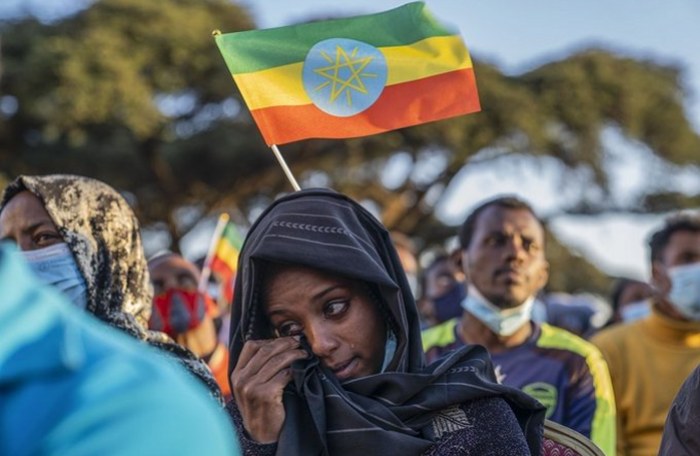
thousands of dead, famine and millions of displaced people are part of the consequences of this conflict.
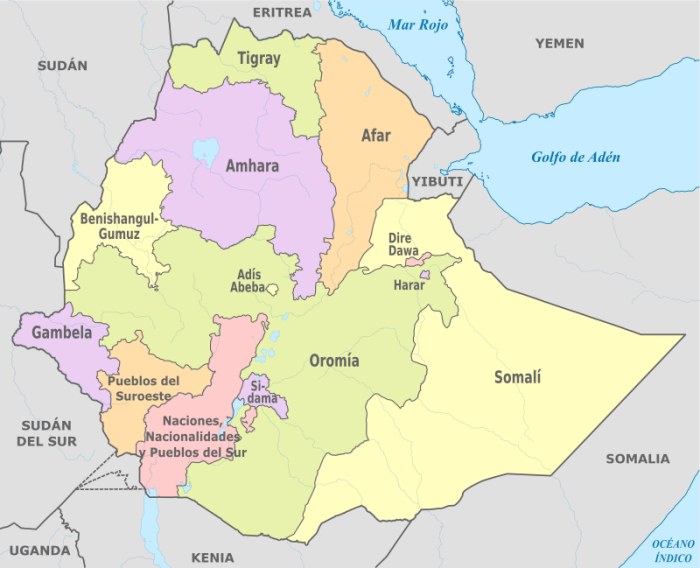
Since the end of 2020 the Tigray region (Tiger), in northern Ethiopia, is devastated by a war that leaves thousands of civilians dead in its wake, a brutal famine - reminiscent of the worst moments of this country in the 1980s′- and also millions of displaced who have had to flee from their homes.
To understand this serious conflict, several things must be kept in mind.. Ethiopia is a federal country of 10 states with 100 millions of inhabitants, the second most populated in Africa, which also has a wide ethnic diversity.
The Oromo, amhara, Somali and Tigray are the main ethnicities who make up more than three quarters of the population, but there is more than 80 different ethnic groups in the country.
After the end of the Mengistu Haile Mariam regime in 1991, the Tigray People's Liberation Front (FLPT) was the dominant group of the multi-ethnic federation of parties that dominated the political scene for almost three decades.
However, the coming to power of the prime minister of the ethnic Oromo Abiy Ahmed in 2018, with its new philosophy of overcoming ethnic differences and its commitment to Ethiopian citizenship, was perceived by northerners as marginalization. Thus, Tigray leaders left ruling coalition, renamed the Prosperity Party (PP).
One of the events that raised tension was in September 2020, when the Tigray authorities carried out the regional elections on their own, despite the fact that the central government had decreed a postponement of all elections in the country due to the pandemic.
Shortly after, at the beginning of November, The Ethiopian Prime Minister accused the FLPT of having attacked a military base, although Tigray state authorities denied the accusation.
Nevertheless, the Government of Abia Ahmed, who paradoxically won the Nobel Peace Prize in 2019 after having agreed to peace with Eritrea after 20 years of conflict, mobilized the army north to disarm rebel leaders in the region, beginning with an escalation of violence that persists to this day and who suffer those close to 7 millions of inhabitants.
From there, complaints were unleashed from the inhabitants of Tigray due to the government blockade in the area., that prevents the arrival of food, humanitarian aid and also the telecommunications blackout, and in turn famine has been generated and more than two million displaced people, without counting the bombings that several cities have suffered.
There are also allegations of ethnic cleansing perpetrated by Amhara security forces against Tigriyans., in an absolutely devastating picture that has gone almost unnoticed in the Western media..
Within the framework of the third cycle of talks “educate yourself” developed by the Emperatriz Menen Asfaw Chile Foundation (FEMA), Gabriela Melei, member of the Ethiopian community in Chile, denounced the atrocities experienced by the population of Tigray.
“Since the declaration of war there have been verified reports of widespread massacres, extrajudicial executions, sexual and gender violence, famine, looting, destruction of medical facilities and forced displacement of millions of Tigrayans”, express Don't stop in his shocking story, who is tigriyana.
“According to the latest figures, more of 500 thousand civilians have been killed in Tigray, while 70 thousand have been forced to seek refuge in Sudan and 2,2 millions of people have been displaced”, he added.
“Of the 7 million inhabitants of the region, 5,2 millions of people, urgently need emergency food assistance, 2,3 millions of them are children”, stressed.
Likewise, The young Ethiopian woman expressed that she has lost part of her family and friends in this conflict and that she does not know the whereabouts of her other relatives..
You can listen to the full conversation in the following video.
Domestic violence
In the second part of the talk, domestic violence in general and also within the Rastafarian community in Chile was addressed to prevent it., address it and aim for reparation for the victims, along with non-repetition.
Isabel Monroy, psychologist, psychotherapist and social researcher, was in charge of presenting about it and you can also see her presentation in the following video.
