














In the Chile of 2001 reggae experienced its moment of explosion. Make 25 years ago, Chilean society was significantly more conservative. The yellow buses reigned in the capital, BIP cards did not exist, Mekano was in fashion and Don Francisco still entertained on Saturday afternoons.
On the other hand, the students broke with a decade of post-dictatorship silence, taking to the streets en masse in a great April mobilization that became known as “the backpack”. The country also began to digitize, the internet was in the “cyber cafes” and prepaid cell phones were no longer just for the elite.
In that context, reggae happened to be a niche “cult” to settle on the radio, on television, in the newspapers and at the big festivals, consolidating the genre as such and as a massive one. that year, The National Stadium in Santiago was the venue that housed more than 70 a thousand souls to pay tribute to the king of reggae, Bob Marley, a 20 years of his death.
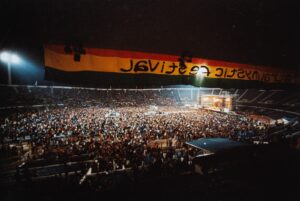
El Natural Mystic Festival, that was carried out 17 of March of 2001, brought The Wailers to Chile for the first time, Bob Marley's original band, and had on its main billboard Gondwana and The Fabulous Cadillacs, in addition to the Chilean bands Bongoroots, Reggae resistance, Scorpions of Rhythm, Iration, Boomer and the Dance Union, and the Tanaka brothers.
The Jamaican group arrived in the country with only three members of the original formation, but that was not of major relevance at a time when the Chilean band, Gondwana, made the National explode and had previously also done so in February, at the Viña Festival.
View this publication in Instagram
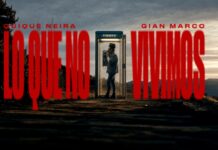
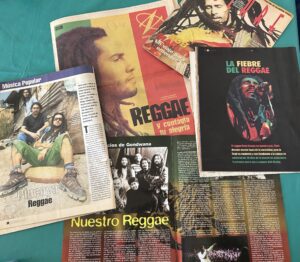
That year was the consolidation of the band with Quique Neira as their vocalist after the publication of their album Praise (2000), that reached an unprecedented massiveness for reggae. Gondwana reggae well embodied the spirit of a musical genre that was born in Jamaica as a voice of the oppressed., a tool to transmit social discontent and criticism of a global system, also to talk about social justice and expand the message of Rastafari.
The reggae of the time was the sound vehicle of the resistance of the student youth that rose up against that deafening silence left by the bloody dictatorship of Pinochet in Chile and where a significant amount of abuse occurred precisely in the National Stadium, concentration camp, detention and torture of the civil and military dictatorship (1973-1990) where they passed around 40 thousand people imprisoned.
All of the above is important to point out when it comes to talking about the “Natural Mystic Festival, the documentary“, audiovisual project that in one more month will see the light commemorating the 25 years of the event, a key piece with historical and unpublished record that to date has never been published about a moment that entire generations are unaware of.
Reggae Chalice Magazine spoke exclusively with its creators, Ignacio Rojas (AND) and Rodrigo Bravo (RB) –also know as Quickman-, who detailed aspects of the process that began as an idea in 2017, shared their visions and the significance of this documentary.
How and why did the idea for this production arise??
AND: This all started last year 2017, maybe a little bit earlier since we met Quickman. He is the human archive of a time when social networks did not exist (…) after several conversations and meetings, We began the crudest research process regarding the history of reggae in Chile and we jumped into the pool, to record after that research process and make some contacts. Looking from afar chronologically at history to the present day, ends of the 80 al 2026, We find that the milestone or the most important date of reggae in Chile is the year 2001 which is where this concert takes place, which is not just any moment.
What do you think was the social impact of this event??
RB: I think that at that moment there was a great social impact because well, the media covered it, was unthinkable that this niche genre would fill a National Stadium, that people could endure all the hours of music, good vibes. As well there was that feeling that reggae could generate something more, that a scene could be opened or established, which never happened. I believe that reggae has always been a movement in Chile and that it has been more about people cultivating a musical style than generating an established scene with places to play..
AND: I realized that it generated a social impact first on reggae lovers in particular due to several factors., a, because it is the first time that a very reggae band comes to Chile, They had come before but not with the cultural weight as at that time, The connection of reggae with Rastafarianism was super strong so it was a form of musical coronation of what was happening in the movement.
It is an important impact because it consolidates the genre in Chile as one that is not only cult, It is not just niche like it is today but at that time it became something more massive. There are people who today are not Rastafari and are not linked to the world of reggae, which was because it was a fashion and because it was a very rebellious alternative to what was established., a non-violent rebellious look. Reggae was rough, was rebellious, but accompanied with a slightly higher intellect that ultimately passed the bill too but at that time it was a great countercultural alternative to what was experienced in Chile and what the youth were experiencing at that time.. Not for nothing was there more than 60 thousand people in the National, that tells you that he is a convener, it's massive, it's shocking.
With 35 and 51 years of age respectively, Ignacio and Quickman have forged a path in researching the history of reggae to date. Both lived the experience of the most massive event in the history of the country from different paths: Ignacio had only 10 and on the day of the festival I was on my way to a family lunch. He passed by the National Stadium and saw the masses dressed in green, yellow and red. came home, He turned on the radio and recorded part of Gondwana's presentation on a cassette.. Quickman, for his part, was the protagonist, He was a percussionist for Bongo Roots - Kingo's band that opened the day- and Tanaka Brothers. He was one of the musicians who was on stage in front of a happy and enthusiastic crowd.
Eager for concerns, They carried out an exhaustive process of collecting information about a time that is not digitized. In the year 2001 the internet was not massive, Youtube, Facebook and Instagram did not exist. Incipient digital communication happened on MSN Messenger and ICQ, music was downloaded through Napster and newspapers only existed in print, They were bought in the kiosks that abounded in the streets throughout the country..
Just as the National Library It was the source of historical archives of the press of the time, people also appeared on the road. Quickman he treasured recordings of the event on three or four tapes. Claudio Duque, Festival producer, shared a photo book. Juan Andrés Cádiz He worked in the technical area and made available console recordings of The Wailers show. The Puccio family, who were hired by the Zamorano brothers of the band Iration, They also shared much of the material they made that day. In parallel, the interviews happened. Many were invited to testify, some accepted, others declined to participate and the least, they did not answer.

These valuable links allowed, In the words of Quickman, “enhance the story and give it a touch, a rather more professional brushstroke” to what they already had in their hands. All this material is part of the visual and testimonial story that this documentary presents to 25 years of an iconic moment.
The first Natural Mystic Festival was a fundamental event in the history of reggae in Chile. The next two did not have the same impact. Before that there were already reggae bands, was not born with the festival, but it was a key moment in its massification, touching millions of consciences nationwide with its message closely linked to Rastafari..
“Natural Mystic set that precedent as the Woodstock of reggae, where reggae can come from, The great reggae stars can come to the country without a doubt. Before the 2001 The only bands that came were the most pop bands linked to reggae because they had songs that were hits that hit., They were world hits. They did not come with the cultural weight of being a reggae band”, commented Ignacio.
At the end of March, the documentary began to be disseminated through social networks.. The date coincided with the day on which 25 years ago Gondwana took the stage at the Viña del Mar Festival for the first time as a band invited to the contest. Since then, Each publication has brought forth the emotion of the memory of those who were part of this event and who lived it from the role they played at the time.: audience, national opening artists, technicians, etc.
“It was very nice because finally this was something that was kept in the memory, not only from us as filmmakers but also from the people who participated and the public who attended. The response on social networks has been very good, very nice that it is a good initiative and that people in general have very good memories of the concert itself”, Quickman expressed.
“Natural Mystic Festival, the documentary” It is an exercise in collective memory. It is a collaborative audiovisual proposal that seeks to revive an event that does not exist in current digital records., in addition to reliving a famous moment of reggae in Chile in an event that managed to attract around 70 thousand people who went to enjoy reggae at the National Stadium in Santiago.
For Ignatius, “It is fair and necessary to revalue the path traveled, revalue the path made by the bands of the time (…) this festival managed to bring together all those bands at one time prime. As a reggae lover, Going through that moment again, I think it is an act of love and healing for that memory that did not exist., like the media is in general debt to reggae and to that time of reggae that was so fruitful”.
Finally, Quickman quoted Marcus Garvey's phrase “A town without knowledge of its past history, origin and culture is like a tree without roots” to highlight that “a 25 years of the festival it was important to observe it, go through that memory again, talk to those who were directly or indirectly involved. It's probably something that will never happen again., but it also allows us to see how this movement has been developing, this musical genre in our country.
“Natural Mystic Festival, the documentary” will be exhibited publicly exclusively -prior to its digital launch- on Saturday 2 of May in the framework of the anniversary 11 from Bunna Cafeteria in Cajón del Maipo. It will later be released on digital platforms. 11 of May, date commemorating the death of Bob Marley.
